Dana describes her projects as ones that “reveal answers and lead to more questions.” Whether something related to her own life or a more universal topic, the idea is the solve something which appears unsolvable. Take, for example, Dana’s recent ongoing project called Scarf Collection. “I sell the scarfs and give half of the money to a Black person or Black-led organisation,” she explains. “Capitalism functions in a space of scarcity, so I wanted to prove to myself that there can be enough, and giving is something that can be built into my art practice.” In turn, the project questions labour, ownership, love and abundance.
It means Dana’s practice today is multifaceted, something which allows her to pull from a history of signals, references and symbols to “draw out emotions and memories we may have forgotten we had.” This often sees her working with found imagery from Ebony Magazine that “highlight[s] the idea of upward mobility and a growing Black middle class.” By utilising a language of humour and familiarity, Dana opens up “complex spaces of laughter and irony, while retaining an empathetic quality.” All this means she can communicate elaborate concepts in understated ways, drawing viewers in before opening up to them.
Art, and the process of making things has always been the primary way that I am able to process, and understand the world
Albert Flores
Whatever the project, however, the exciting part for Dana is “the way I can surprise myself with a combination of colours I have never seen before but remind me of something that I miss.” And this is exactly what she plans to continue doing, with plans for a group show in October and several artists residencies in the coming year. “Between now and then I am continuing to explore materials, ask questions and make scarfs,” she says.

Currently based in New York, a city she’s called home since graduating from the School of Visual Arts with an MFA in fine art in 2019, Dana tells us she’s simply never been interested in being anything other than an artist. “Art, and the process of making things has always been the primary way that I am able to process, and understand the world,” she explains. It was at SVA that her unique practice formed, as she explored “digital art, web, fashion, 3D design and printmaking on top of painting and drawing” during her undergrad in graphic design.
- Through her artistic practice, Johanna Tagada Hoffbeck invites positivity into everyday life
- Art duo Mazaccio & Drowilal use collage to deconstruct popular culture
- Rosanna Webster, Fon and Fa, and Parker Heyl embody the human qualities of creativity through experimentation
- Through rich and colourful symbolism, Bony Ramírez uses art to reflect on his Caribbean culture
Founded by French-Lebanese sisters Laura and Sophie Tabet, as well as Ulysse Sabbagh, in partnership with Lebanese creatives Flavie Audi and Emilie Kareh, stock will be added to the store weekly until early January. “We have been humbled by the number of people who have come forward and answered the call to help Lebanon,” says founder Laura Tabet. “In these dark times, it’s deeply heartening to witness the artistic community coming together to create a movement that is beyond politics and beyond borders.”
Read Next
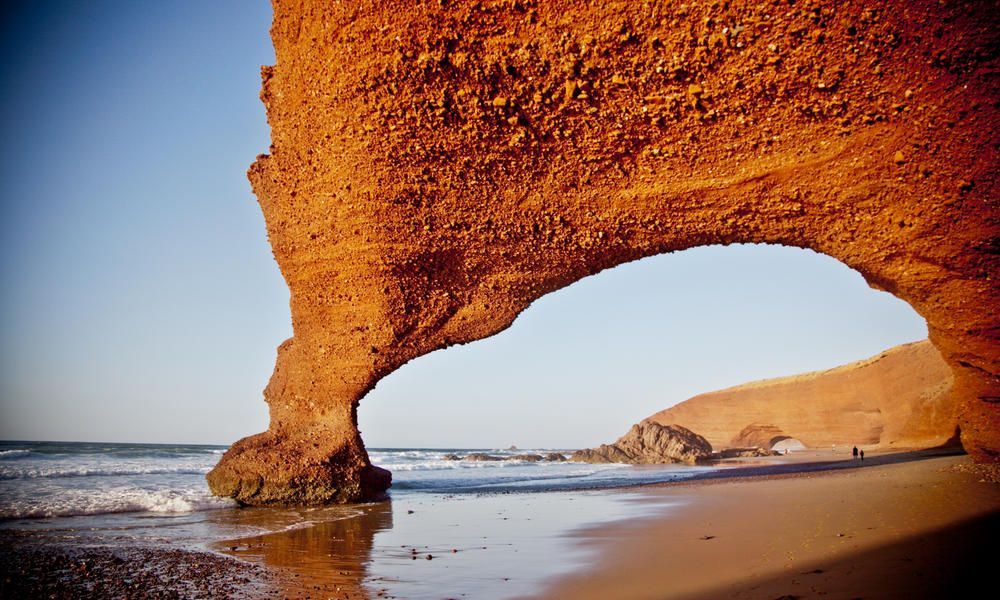
The Mediterranean Realignment and Morocco’s Strategic Positioning
Menu About The Foundation Vision & Mission Governance Our Priorities Programs & Initiatives Insights Contact us The Mediterranean Realignment and Morocco’s Strategic Positioning Regional context A Mediterranean basin in reconfiguration The Mediterranean is no longer simply a commercial crossroads: it has once again become a space of strategic competition between major powers. Russia, since its […]
The Automation Threshold: Which Moroccan Professions Face the Greatest Disruption?
Menu About The Foundation Vision & Mission Governance Our Priorities Programs & Initiatives Insights Contact us RESEARCH BRIEF · TECHNOLOGY & AI The Automation Threshold Which Moroccan Professions Face the Greatest Disruption? A quantitative analysis of occupational vulnerability to AI-driven automation across Morocco’s labour market — sector by sector, region by region. Essential reading for […]
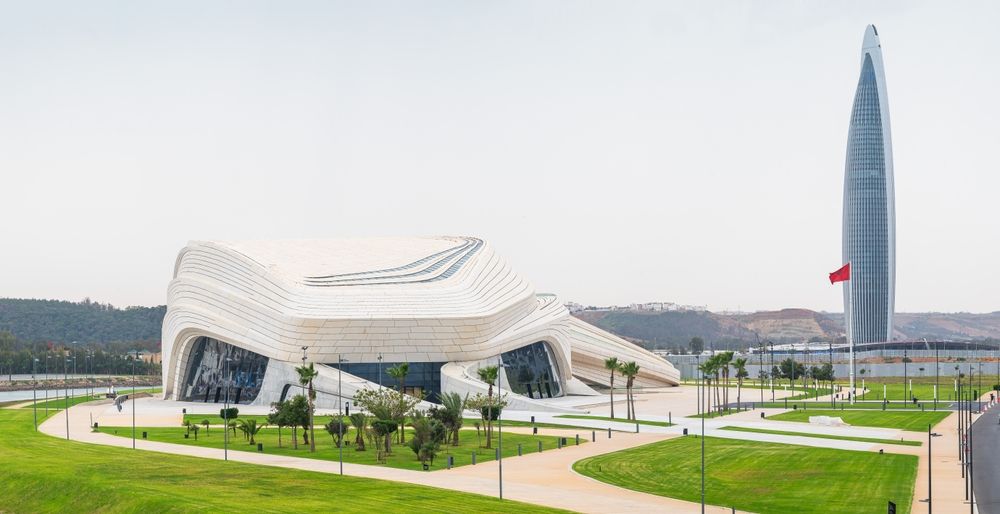
Morocco 2035: Four Scenarios for the Nation’s Next Decade
Menu About The Foundation Vision & Mission Governance Our Priorities Programs & Initiatives Insights Contact us Morocco 2035: Four Scenarios for the Nation’s Next Decade Executive Summary Morocco stands at a defining moment in its national trajectory. Over the past two decades, the Kingdom has built world-class infrastructure, expanded its industrial base, accelerated renewable […]

Denisse Ariana Pérez on documenting a real portrayal of marginalised communities – not models, not victims
Senectus sociosqu facilisis volutpat duis volutpat curae; ipsum blandit aenean augue pede auctor id, faucibus, viverra venenatis aptent vehicula lectus ante lorem, dui.

What lies behind artists and designers’ eternal obsession with Tarot cards?
Velit vehicula inceptos phasellus, non interdum vestibulum facilisis duis nec est sapien non. Fusce vivamus dapibus sollicitudin curabitur mus eu ad eget nulla.

What would Wikipedia look like if it acknowledged its gender and racial biases?
Featuring donations from 105 artists across the industry, Beirut Re-Store features objects from $15 to $15,000 to raise money for Lebanon.

Architects as Inventors: Building a Product From Concept to Market
Diam justo orci class, tellus inceptos cubilia laoreet. Nunc ornare Arcu ullamcorper elementum maecenas. Vitae eros at commodo fermentum vestibulum eleifend velit ad.

Monumento is a creative office aiding and pushing brands through a visual evolution
The painter’s generic, unblemished figures are a direct reference to all that we’ve experienced over the last year.
In her questioning practice, Dana Robinson explores youth, Black female identity, ownership and nostalgia
Tempor pulvinar sagittis nostra aliquam rutrum facilisis bibendum curabitur eros per penatibus. Enim venenatis tincidunt pulvinar iaculis dui ultricies sed. Montes nostra pharetra.
M/M (Paris), Jamie Hawkesworth, OK-RM and more donate works for Beirut Re-Store
Metus et. Ligula pulvinar morbi, nostra nisl aptent nonummy donec gravida nullam. Curae nam. Lacus consectetuer sollicitudin ornare ornare aliquam in viverra lacinia varius magna.
One example of this is Ebony Reprinted, a series of monoprints that present “the healing possibilities of abstraction.” To make the works, Dana used images that circulated in printed adverts and distorted them using paint to “remove traces of exploitative, white-dominated, capitalist, visual language and allow the individuals in these images to regain their agency.” She does this by smearing, pressing and adding texture to paint and, as the individuals and their faces becomes more abstract, the notion is that they also become “exponentially more present.”
As well as Beirut Re-Store’s marketplace, towards the end of October the platform will launch a “special collection of bespoke items” made in collaboration with non-profit organisation Creatives For Lebanon. This collection is already confirmed to feature contributions from Dior, Jean Paul Gaultier and Supriya Lee.
With a background in both graphic design and art, Dana Robinson’s practice sits at a fascinating intersection. She understands the power of combining imagery and text and the cultural and social connotations that come along with doing so, but she also embodies a freedom of expression often lacking in graphic design, meaning Dana’s portfolio errs towards abstraction and conceptual investigations. The onus of these investigations is on youth, Black female identity, ownership and nostalgia, topics she explores by combining, reproducing and deconstructing vintage materials, found objects and paint.